
Overview
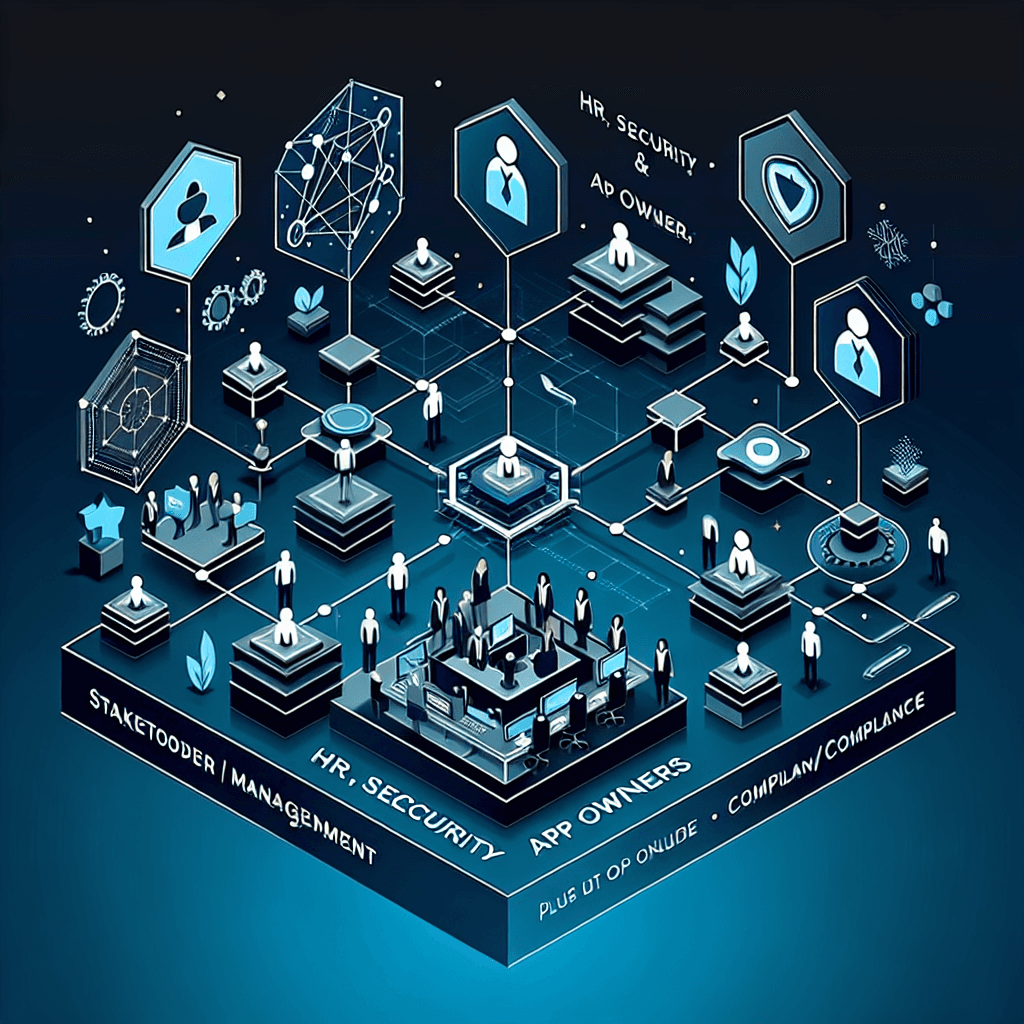
Identity and Access Management (IAM) projects are 20% technology and 80% politics. Unlike other IT initiatives that might sit in a silo, IAM touches every user, every application, and every data point in the organization. This breadth means that almost every department has a stake in the outcome, and often, conflicting requirements. Successful IAM consultants must navigate this web of influence, clarify decision rights early, and manage expectations relentlessly. The RACI matrix (Responsible, Accountable, Consulted, Informed) is not just a documentation artifact—it is a survival tool to prevent "decision swirl" where projects stall because no one knows who has the final say.
Key Stakeholder Personas
The Security CISO/Director
Careabouts: Risk reduction, audit findings, compliance, incident response. Typical Stance: "Lock it down." Consulting Strategy: Position IAM as the enforcement arm of their policies. Use their authority to unblock resistance from app owners.
The HR Director
Careabouts: User experience for new hires, data privacy, process efficiency (onboarding speed). Typical Stance: "Don't break my payroll data." Consulting Strategy: Treat HR as the "Source of Truth" king. Win them over by showing how IAM automates their manual work (e.g., automated account creation).
Application Owners
Careabouts: Uptime, availability, user friction (hating MFA), development velocity. Typical Stance: "Stop slowing down my users." Consulting Strategy: Speak their language (OIDC, APIs). Show how SSO reduces their support tickets and improves adoption of their app.
Compliance / Audit
Careabouts: Evidence, reports, segregation of duties (SoD), clear trails. Typical Stance: "Show me the proof." Consulting Strategy: Involve them early in requirements to ensure the system builds the reports they need. They are your best ally for funding and urgency.
Methodology & Frameworks
The RACI Matrix
A clear RACI matrix prevents the common IAM failure mode of "management by committee."
| Role | Responsibility |
|---|---|
| Responsible (R) | The "Doer." People who actually configure the tool, write the policy, or clean the data. |
| Accountable (A) | The "Buck Stops Here." ONE person per task who signs off. e.g., CISO for Policy, HR VP for User Data. |
| Consulted (C) | The "Loop In." People whose opinions are sought (Two-way communication). App owners, Helpdesk. |
| Informed (I) | The "FYI." People who are told after a decision is made (One-way communication). End users. |
Stakeholder Mapping
Create a quadrant map (Influence vs. Interest) for every key player.
- High Influence, High Interest: Manage Closely (Key decision makers).
- High Influence, Low Interest: Keep Satisfied (Sponsors who can block you).
- Low Influence, High Interest: Keep Informed (Squeaky wheels, eager adopters).
- Low Influence, Low Interest: Monitor (General user base).
Key Decisions
| Decision | Options | Recommendation | Notes / Gotchas |
|---|---|---|---|
| Who owns the Identity Data? | HR, IT, Security, or Federated? | HR for employees; IT/Security for non-employees. | Never let IT "fix" HR data downstream. Fix it at the source (HR) or the project will fail. |
| Who approves Access Policy? | CISO, App Owner, or Business Manager? | Business Manager (data owner) with CISO (guardrails). | Security shouldn't approve every access request; they set the rules. Business owners accept the risk. |
| Who signs off on UAT? | Project Team or Business Users? | Business Users. | If the business doesn't test, they won't adopt. "It worked for IT" is not a valid sign-off. |
| Who owns the Budget? | CIO or CISO? | Shared or CISO. | IAM is often funded by Security but operated by IT. Clear cost-center alignment is needed for ongoing OpEx. |
Implementation Approach
Phase 0: Discovery & Mapping
Activity: Interview key department heads. Ask "What is your biggest pain point with access today?" (HR: "Onboarding is slow." Security: "We can't audit." Users: "Too many passwords."). Output: Stakeholder Map, Draft RACI, Success Criteria defined by stakeholder.
Phase 1: Alignment & Charter
Activity: Convene the Steering Committee. Present the RACI. Get the "A" (Accountable) names written in blood (metaphorically). Output: Project Charter signed by the Executive Sponsor.
Phase 2: Continuous Communication
Activity: Weekly status reports tailored to the audience. (Execs get "Red/Yellow/Green" & Risks; Techs get Jira burn-downs). Output: No surprises.
Phase 3: Sign-off & Handover
Activity: Formal acceptance of the system. Transition ownership of the "Run" state to the operational teams defined in the RACI. Output: Final Sign-off Document.
Deliverables
- Stakeholder Register: List of names, roles, contact info, and "careabouts."
- RACI Matrix: Detailed Excel/Confluence table mapping deliverables to roles.
- Communication Plan: Who gets what update, when, and via what channel.
- Steering Committee Deck: Monthly high-level update template.
Risks & Failure Modes
| Risk | Likelihood | Impact | Early Signals | Mitigation |
|---|---|---|---|---|
| The "Phantom Sponsor" | High | High | Sponsor never attends meetings, delegates to a junior deputy. | Force a "Go/No-Go" decision on their involvement. Re-charter if necessary. A project without a sponsor is a zombie. |
| The "App Owner Revolt" | Med | High | Critical app owners refuse to integrate SSO/Provisioning. | Leverage the CISO's mandate. Show value (reduced support costs). escalate to Steering Committee. |
| Analysis Paralysis | Med | Med | Stakeholders debate policy endlessly without deciding. | Set strict timeboxes. Default to industry standard policies if no decision is made by deadline. |
| Shadow IT Discovery | High | Low | Finding apps nobody knew about. | Treat as scope management. Document them, but don't derail the core timeline to fix them all immediately. |
KPIs / Outcomes
- Decision Velocity: Average time to get a key decision signed off (Target: < 5 days).
- Stakeholder Attendance: % of Steering Committee meetings attended by the Sponsor.
- Conflict Resolution: Number of escalated issues resolved within agreed SLAs.
- Adoption Rate: % of key stakeholders who actively advocate for the new system.
Consultant's Notebook (Soft Skills)
How to say "No" without getting fired
- Never just say "No." Say "Yes, but..."
- "Yes, we can add that custom attribute, but it will delay the UAT phase by two weeks and requires a change order. Shall we proceed?"
- Put the trade-off back on them.
Reading the Room
- In meetings, watch who looks at whom before speaking. That person is the real decision maker, regardless of the org chart.
- Identify the "resistors" early. Don't ignore them; buy them coffee. Understand their fear (usually loss of control) and address it.
The "Parking Lot"
- When stakeholders derail a meeting with edge cases ("What about the consultant in Antarctica who needs access via satellite?"), put it in the "Parking Lot."
- "Great point, let's capture that in the Parking Lot to ensure we don't lose it, and get back to the core agenda."
- (Make sure you actually review the Parking Lot later).